Foodservice Growth Can Open the Door Before Retail Does
In some markets, ingredients and semi-finished formats fit demand earlier than finished retail products because kitchens need speed, consistency, and labor efficiency first.
Quick Snapshot
Author & Editorial Lens
TenJoy B2B Channel Desk
Published
April 2, 2026
What This Focuses On
Why brands with strong supply capability may find a better first entry path through foodservice than through consumer retail.
Reader Lens
Why brands with strong supply capability may find a better first entry path through foodservice than through consumer retail.
Key Point
Not every brand needs to start with end-consumer retail.
Key Point
Foodservice can validate supply capability and taste fit faster in some markets.
Key Point
B2B channels often care more about stability and efficiency than eye-catching packaging.
If this is your current stage
Translate the article into concrete decision moments readers can map to their own work right away.
You are evaluating a new market, but the team is not aligned
Some people see demand, others see execution risk. This framework helps align priorities.
You already have leads, but still have not chosen the first use case to win
Trial efficiency depends less on how many leads you have and more on choosing the first use case you can execute well.
In some markets, B2B demand can establish itself earlier than B2C retail
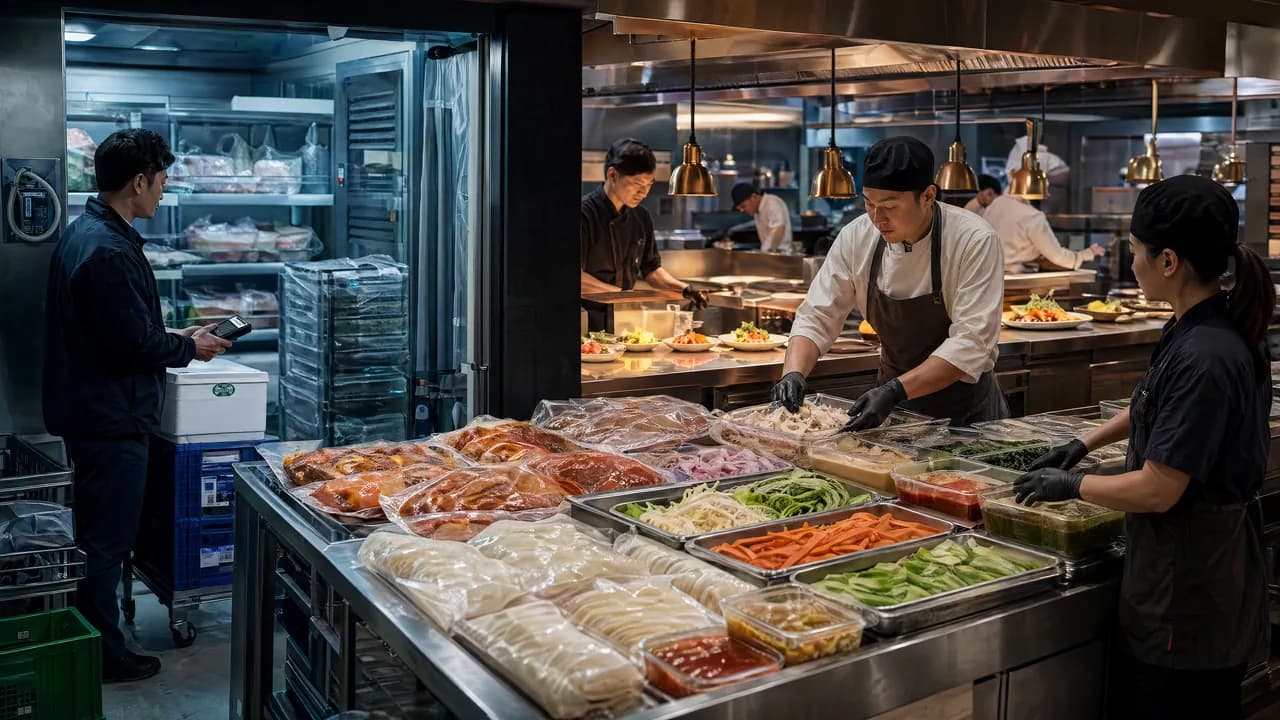
Not every export path needs to begin on the retail shelf. In some markets, foodservice demand creates an earlier and more practical opening for ingredients and semi-finished products.
Professional kitchens care first about speed, consistency, labor efficiency, and stable supply. That makes them a better first customer than retail in situations where supply capability is the main strength.
Kitchen-efficiency pressure creates the opportunity for semi-finished products
For many brands, foodservice becomes the lower-friction way to prove fit, earn repeat demand, and learn the market before spending heavily on end-consumer positioning.
In that setting, operational convenience can outperform packaging-led differentiation.
This path suits teams that can prove supply capability
Foodservice buyers usually care less about visual novelty and more about dependable quality, format stability, and service rhythm. For many supply-driven teams, that is a better first battlefield than immediate consumer retail expansion.
It also creates a practical way to learn the market before investing heavily in end-consumer marketing.
TenJoy perspective
A market-entry path does not have to begin with the shelf if the kitchen is where demand is forming faster.
TenJoy sees ingredients and semi-finished products as a strategic wedge when the team can turn supply capability into daily operating value for customers.
References compiled for this article: USDA FAS Data and Market Reports、Austrade Food and Beverage。
Common mistakes
Many teams treat market entry as a single channel negotiation, but success is usually decided much earlier. If labeling, pack size, price band, sample feedback, and replenishment rhythm are not connected in advance, every later step becomes more expensive.
A real entry strategy cannot answer only who to sell to. It also has to answer who will execute, how fast feedback returns, and who fixes problems when assumptions break.
Signals to confirm before market entry
At minimum, teams should confirm three signals: whether consumers can understand the product quickly, whether the channel is willing to give the brand a second chance, and whether the team can turn a first order into repeat demand.
When all three signals are present at the same time, the opportunity is more likely to be real rather than a temporary burst of enthusiasm.
Frontline execution checklist
From samples and labels to price band, replenishment plan, and channel contacts, it helps to keep one shared checklist from the start of the project. Then, when feedback comes back, the team can decide quickly whether to adjust packaging, flavor, or supply rhythm.
The checklist may look basic, but it is usually where export work stops being driven by personal instinct and starts becoming an organizational capability.
If you are in one of these situations
One common situation is that your business is moving beyond a single pilot and now touches multiple markets, distributors, warehouses, or teams. The amount of work keeps rising, yet the organization feels less certain because the old way of coordinating is no longer enough.
Another common situation is that every disruption leads to repeated confirmation across teams about who owns the issue, where it happened, and what should happen next. In that phase, what users need most is a clearer operating rhythm, not more fragmented activity.
From the user's point of view, what should happen next
The most valuable next step is usually to define the few coordination points that shape execution quality first: order status, inventory status, batch flow, and exception handling.
The team that can standardize these signals, assign ownership, and create a working rhythm around them is far more likely to turn market entry into repeatable progress instead of isolated wins.
Explore Further
Continue from this article into related market, category and solution pages to build a fuller decision path.
Related Market
Japan Market Detail
See market-entry thresholds, channel structure and fulfillment priorities for Japan.
Related Category
Snacks Category Detail
Extend into snack demand signals, packaging logic and replenishment rhythm.
Related Solution
Market Research & Diagnosis
Turn the article into entry assessment, channel priorities and a workable launch rhythm.
Previous article
Overseas Channel Growth Depends on Local Replenishment Rhythm
Many brands can win the first order. The harder test is whether they can replenish locally at the pace the channel expects once demand starts moving.
Next article
Retail Newness Should Never Replace Basic Shelf Clarity
A product can look fresh in marketing and still fail at shelf if shoppers cannot quickly understand what it is, who it is for, and why to buy it.
Related Articles
Continue with practical notes connected to this topic.
Japan Convenience Needs Smaller Packs and Faster Replenishment
In Japan's convenience channel, success is not about getting listed once. It is about shelf productivity, compact pack design, and how quickly you can refill demand.
Korea Demands Two Playbooks: Convenience Stores and Marketplaces
Korea moves fast, but convenience retail and marketplace commerce reward very different operating habits, launch timing, and brand communication styles.
Southeast Asia's Online Growth Still Needs Offline Trust
Platform traffic is rising across Southeast Asia, but first purchase and long-term trust are still often built through visible local touchpoints, not digital reach alone.